
The short answer: most pink sparkling wine is made to be young, bright and simple. Our Urchin is a sparkling rosé of Pinot Noir that we let mature in barrel before it ever gets its bubbles, and that gives it depth you don’t usually find in a rosé. To me, it’s what rosé really can be if it’s given enough time and attention and love.
Where it comes from
The 2024 Urchin is 92% Pinot Noir and 8% Chardonnay, all from cool-climate vineyards: Vista Verde Vineyard in San Benito County, the Santa Cruz Mountains, and, new this vintage, Carriger Vineyard in Sonoma County. The 2023 was just San Benito and Santa Cruz fruit. In 2024 we added Sonoma, and it was our first year working with Carriger.
The rosebud
I sometimes call the Urchin the rosebud, a wine that rewards patience. I didn’t plan it that way. At first I wanted it to be a fairly quick-turnaround wine, like our Albariño. The Octopus is at its best young. Pinot Noir isn’t. Pinot Noir is slow to develop, and the more I worked with the rosé, the more I realized it’s just much better once we let it age properly in the cellar.
So we gave it time:
- In barrel. The young wine ferments with native yeast in barrel and rests there for about nine months, with no added sulfur until bottling. We’re not sulfuring early, we’re sulfuring late, and that lets the wine develop and mature.
- With older wine. About 10% of the blend is older wine, aged and fermented the same way, in barrel with native yeast and native malolactic, as part of our Reserve program. Blending that into a young rosé that spent about nine months in barrel gives it real depth and complexity.
- In the bottle. Then comes the second fermentation and a long rest on the yeast before we disgorge it by hand and seal it with a red crown cap.
The aging is done by the time we release it. I don’t particularly recommend aging it in the bottle after that. It ages fine, but the work is already done.
Not your typical pink sparkling wine
A typical rosé is all about youthful flash and bright red fruit. The Urchin still has red fruit, with aromas of wild strawberry, guava and rose petal, but barrel time takes it further. We let the wine develop and find a second layer of flavor, the kind that only comes with some maturity.
So it’s much more than a simple rosé. It’s developed, with richness, complexity and depth.
Why a sea urchin?
Some of the best food in the world is seafood, and really fresh, well-prepared uni is a special delicacy. I think it goes beautifully with rosé. Uni is the Japanese name for sea urchin, and it’s still my first pairing for this wine.
What to eat with it
- Uni, as fresh as you can find it.
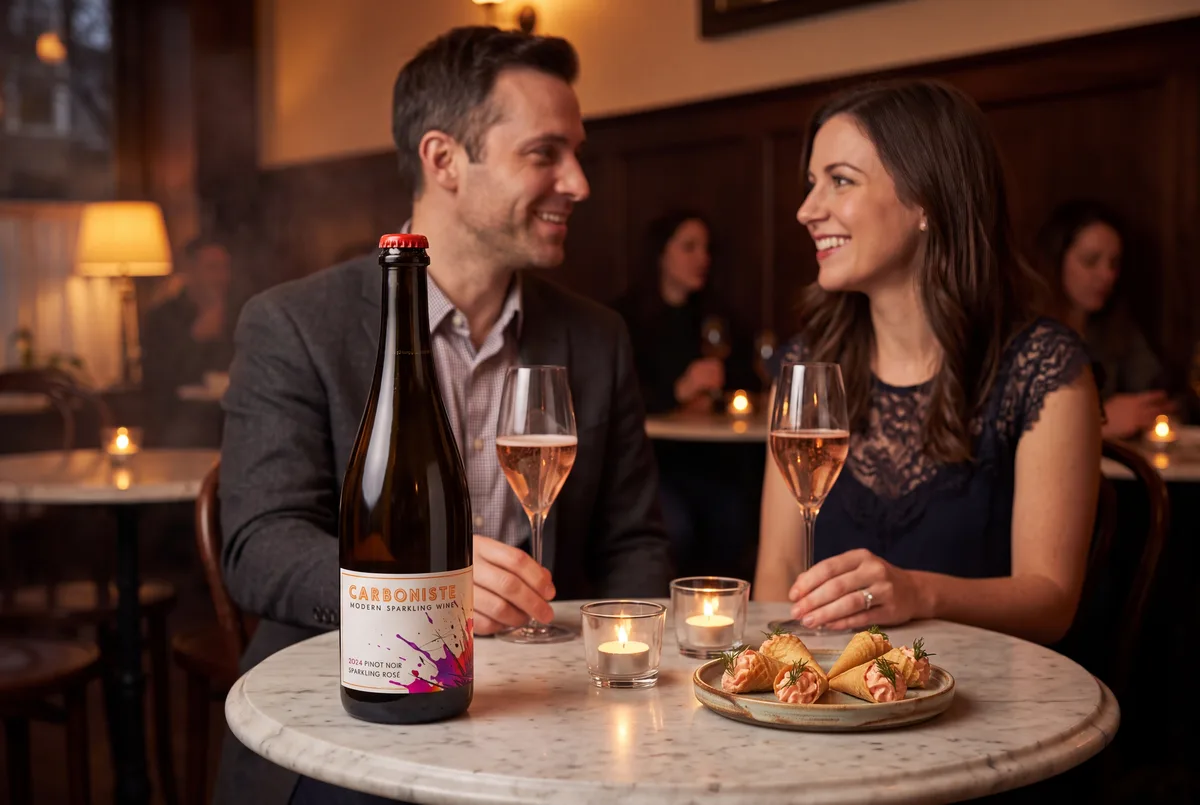
- Salmon mousse cornets, a classic canapé: a crisp little cone filled with silky smoked salmon mousse. The bubbles cut the richness, and the Urchin’s red fruit picks up the salmon.
When to open one
The Urchin is a wine for a slow evening: a romantic dinner for two, at your favorite neighborhood restaurant or at home, candles lit, nobody in a hurry. Serve it between fridge and cellar temperature: take it out of the fridge and let it warm a little in the glass as the night goes on.
Quick answers
What is a sparkling rosé of Pinot Noir? A pink sparkling wine made from Pinot Noir. We press the whole clusters gently, so the juice picks up just a blush of color from the red skins.
Is sparkling rosé sweet? Not ours. The Urchin gets only a light dosage at disgorging, so it’s dry.
What food goes with sparkling rosé? Seafood, especially uni; smoked salmon; and rich canapés. The bubbles and acidity cut through richness.
Should I age sparkling rosé? The Urchin is aged before release, in barrel and in bottle, so it’s ready to drink when you buy it.