
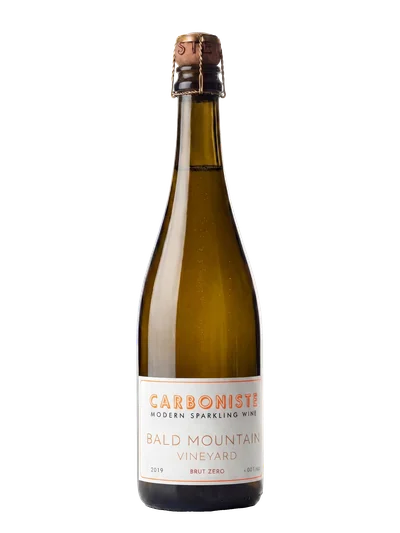

The short answer: orange wine is white wine made like a red. Instead of pressing the juice off the skins right away, the white grapes ferment with their skins for days, which gives the wine color, flavor and a little grip. Our Crab is a sparkling orange wine, Albariño and Pinot Gris fermented on their skins and then made sparkling the traditional way. Winemaker Dan Person’s short version: “It’s sparkling wine with guts.”
Sparkling wine with guts
“It’s a concentrated sparkling wine with a lot of flavor and density that you don’t necessarily expect from a sparkling wine,” Dan says. “It’s got presence and power and concentration.” It’s also very juicy. For someone who’s never had orange wine, let alone a sparkling one, he says the texture alone is “kind of mesmerizing.”
It behaves like a red wine, with tannin and real texture from the skins, but it smells like a white: all the aromatic prettiness of Albariño.
What the skins give it
“It gives it a lot of flavor, because you’re actually extracting flavor from the skins,” Dan says. The 2024 Crab is 54% Albariño and 46% Pinot Gris, the same grape as Pinot Grigio.
Albariño on its skins is the part he finds most exciting. “It takes the varietal character up to 11,” he says. “You’ve got this strong botanical white flowers, like you’re walking into a botanical garden.” The crisp apricot you taste in our Octopus, which is Albariño made without skin contact, ripens into apricot and nectarine. The Pinot Gris adds peach and a little herbalness.
Both grapes bring a touch of tannin. That builds the texture, and with time in barrel it turns into an overall sweetness of fruit. That’s not sugar; the Crab is a dry wine.
How we make it: the submerged cap
Most red wines get stirred while they ferment. Winemakers pump the juice over the skins or punch the skins down. We don’t. “When we ferment anything on skins, we do it as a submerged cap fermentation,” Dan says.
- We fill the tank with grapes and juice, lay a tarp over the fruit, and cover the tarp with water. That pushes the air out of the tank.
- We let it rest. Over the next few days, it starts fermenting on its own, with native yeast. “We’re not adding any yeast to it,” Dan says.
- We wait for the cap to rise. After about 10 days, the fermentation gives off enough carbon dioxide to push the cap up and the water out over the top of the tank. That’s when we drain and press.
No pumping and no punching down means we get flavor without harsh tannin. “When we do skin contact, especially with the whites, I’m approaching it like it’s tea, like a botanical tea, where we want to be gentle,” Dan says. “We want flavor, we want a little bit of color, but we don’t want excessive amounts of tannin, excessive amounts of bitterness.”
After pressing, the wine finishes in barrel, goes through natural malolactic conversion, and rests about nine months. Then it gets its second fermentation in bottle, six months on the yeast, and hand disgorging. It’s sealed with our red crown cap.
Why a crab?
The Crab “starts all elbows,” as our notes put it. Dan explains: “With something like a live crab, it’s something you wouldn’t want to try to eat. They’re prickly, they’re kind of wild. They can pinch you.” Once it’s cooked, it’s sweet and tender. “The winemaking process, like the cooking process, takes that crunchy hard thing and makes it something tender and delicious.”
You don’t have to do anything special to get there. Drink it cold, the way you’d drink any sparkling wine, and let it warm a little in the glass.
What to eat with it
The Crab is one of our most food-friendly wines. “It does actually work on a pretty broad range of cuisine,” Dan says. It has enough flavor to stand up to dishes that are a bit spicy, and enough sweetness of fruit to balance them. It’s our pick for raw oysters with mignonette and a dash of hot sauce, in our oyster guide.
It’s also one of the rare wines Dan likes with cheese. “Oftentimes I feel like cheeses overpower white wines,” he says. “But the Crab has enough flavor density to stand up really well against just about anything you want to throw at it.” Cream sauces, too.
Dan’s picture of the perfect Crab night is a seafood boil: a long table covered with shrimp, crab, corn and potatoes, everyone eating with their hands, and a few cold bottles going around.
The one thing to remember
“This is a sparkling wine like none other,” Dan says. “It’s going to be different, but also very exciting. It’ll be delicious and kind of juicy.” It’s the clearest example of how he likes to make wine: something that surprises people, because they’ve never had anything like it. “Give it a rip. Try it out.”
Quick answers
What is orange wine? White wine made with skin contact: the white grapes ferment with their skins, which gives the wine an amber color, more flavor and a little tannin.
What is sparkling orange wine? An orange wine made sparkling. Ours gets a second fermentation in the bottle, the traditional method.
Is orange wine sweet? No. The Crab is a dry wine; the “sweetness” people notice is ripe fruit, not sugar.
What food goes with orange wine? Bolder dishes than most white wines can handle: a seafood boil, cheese, cream sauces, or oysters with a little hot sauce.