
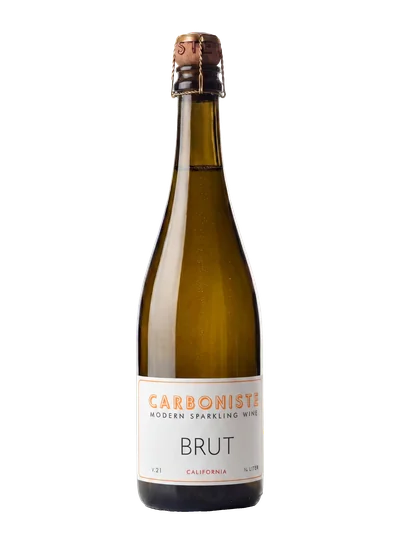
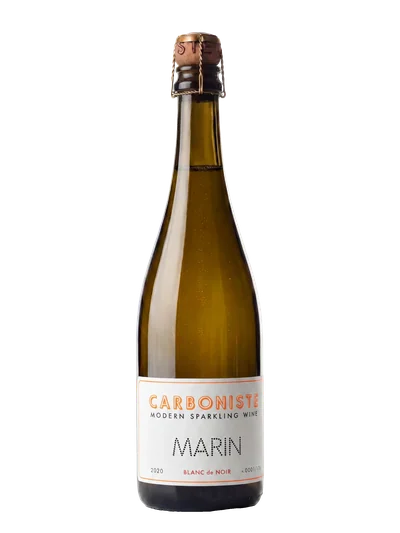
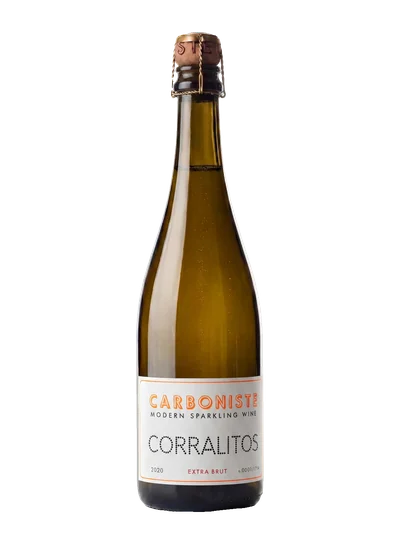
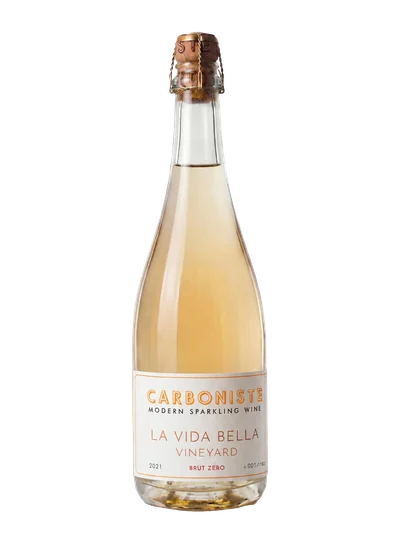
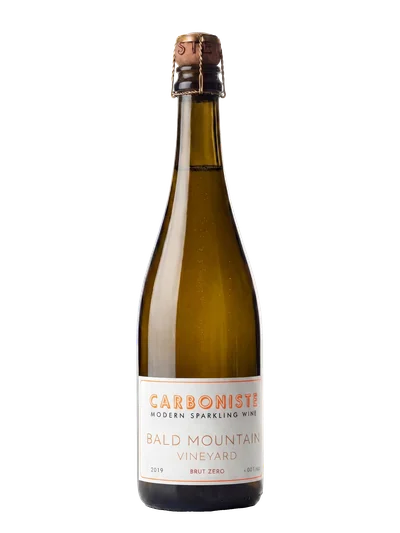
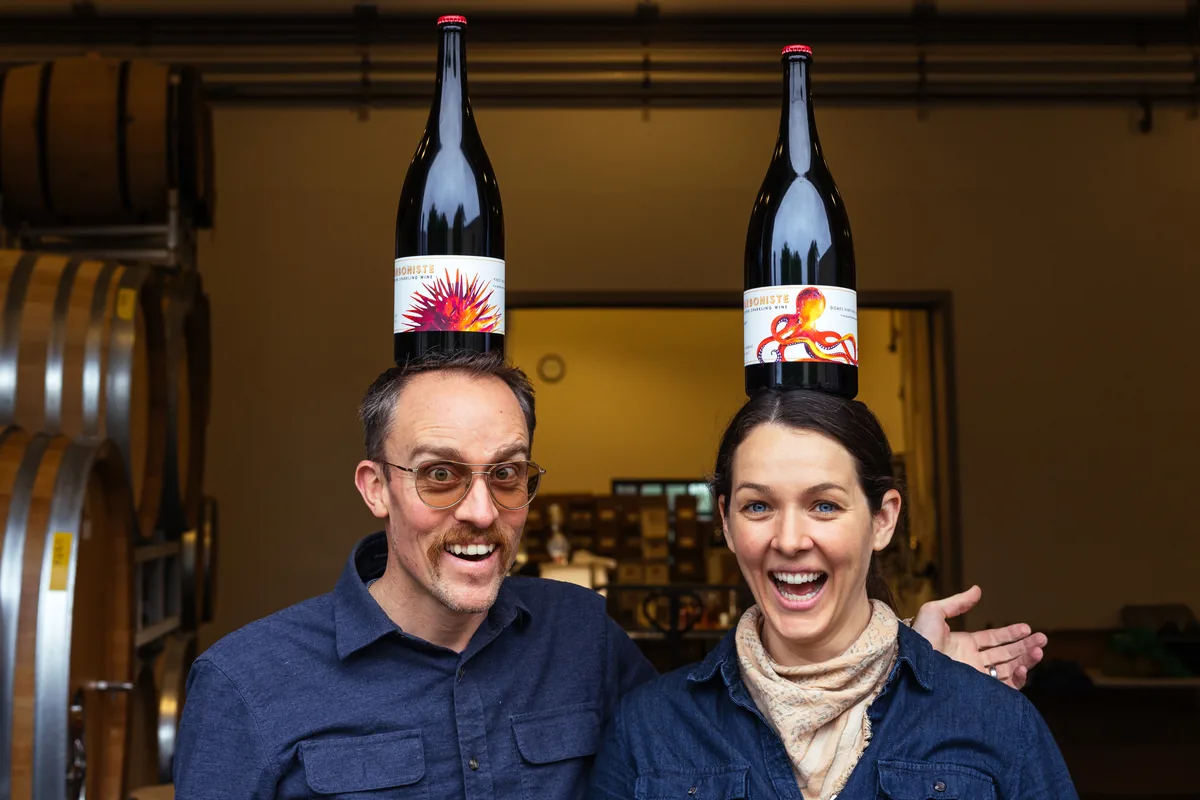
The short answer: disgorging is how the yeast gets out of a bottle of sparkling wine. After the second fermentation, the spent yeast is collected in the neck of the upside-down bottle. Then the bottle is opened, and the pressure inside pushes the yeast out while the wine stays in. Most wineries freeze the bottle necks first and use a machine. We do it by hand, on the fly, one bottle at a time.
Why the yeast has to come out
Traditional-method sparkling wine, the way Champagne is made, gets its bubbles from a second fermentation inside the bottle. “You bottle it with yeast,” says winemaker and co-founder Dan Person, “and you want to remove that yeast before you sell it.”
First comes riddling: the bottles are slowly turned and tilted, over about five days, until the yeast slides down into the neck. Then comes disgorging, which Dan calls “this sort of magical step where you can open the bottle and take the yeast out even though the bottle’s upside down.”
To help the yeast slide, we add a riddling aid to our traditional-method wines when we bottle them. It’s a mix of bentonite, a clay, and kaolin, the clay porcelain is made from. “Yeast naturally has a bit of stickiness and likes to stick to glass,” Dan says. These minerals don’t dissolve in the wine. They make the yeast heavier and more slippery, so it slides down cleanly. (Our pét-nat, the Mackerel, is made a different way.)
Disgorging on the fly
Big sparkling houses usually freeze the neck of each bottle in a chilled bath, so the yeast becomes a little ice plug that pops out when the cap comes off. We don’t. When we started, as Dan puts it, “a bootstrap mom-and-pop small operation,” a neck freezer wasn’t in the budget.
So he improvised one. “I started out actually using rock salt and ice, kind of like you make ice cream at home,” he says. It worked, but your hands get wet and cold, you buy a lot of ice every disgorging morning, and you spend the day feeding the bath. Eventually he taught himself to disgorge à la volée, French for “on the fly.”
Here’s how it works:
- The bottle comes off the riddling rack upside down, with the yeast resting on the cap and a small bubble of air trapped at the top, in the punt.
- The bottle gets turned upright. Simply flipping it would wash the yeast back into the wine, so timing is everything.
- As the air bubble rises through the neck, the cap comes off. The wine is under about six bar of pressure, roughly six times the air around you. The bubble expands in a flash and shoves the yeast out the neck, and the wine stays behind.
“At just the right moment,” Dan says. That’s the whole skill.
What it sounds and looks like
We pop each bottle into a bucket, and it’s loud. “The sound is like a nice sort of, almost like a shotgun blast,” Dan says. “It echoes against the bucket as well, and so you get kind of a nice bang out of it.”
It’s also a little messy, with some spray-back on every bottle. Dan used to wear an apron. Now he prefers rain gear: “At break time, at lunch time, I can just take off the rain gear and I’m clean.”
How fast can you go by hand?
Faster than you’d think. One person can disgorge about 150 cases in a day, close to 2,000 bottles, usually with two people working at once. “If you’ve got 1,000 cases, it’s going to take you a couple weeks to get it done,” Dan says, “but that’s not that bad.”
Some wines get disgorged all year. The Octopus, our sparkling Albariño, is a big enough lot that we disgorge it as we need it. A small Reserve lot might take a single day.
What goes wrong, and how we catch it
The risk is timing. “You can take the cap off a little too early, a little too late,” Dan says. Too early, and you push out wine along with the yeast. Too late, and the yeast mixes back into the wine and the bottle turns cloudy. A cloudy bottle never goes out the door. We set it aside, riddle it again, and disgorge it the next time around.
Every method loses a little wine, by hand or with a neck freezer. For us it’s typically between one and three percent. The yeast itself has no second life. “It gets wasted, goes down the drain,” Dan says.
After the pop
Once the yeast is out, things move quickly but calmly. Most of our wines get a small dosage, a little sugar that rounds out the wine without making it taste sweet. (More on that in our guide to dosage and label terms.) Any bottle that lost a little too much wine gets topped up with the same wine, from other bottles disgorged that day. Then the critters go back under a red crown cap and the Reserve wines get a cork and cage.
The wine needs time to recover afterward. “At disgorgement a lot of CO2 shoots out, but oxygen gets in too,” Dan says. Like any wine that’s just been bottled, it goes through a short spell of bottle shock. Our Reserve wines rest six to twelve months after disgorging before we sell them.
Why we still do it by hand
We’d love to tell you hand disgorging is a secret flavor ingredient. Dan is more honest than that. “It’s just about being lean operationally,” he says. A neck freezer and a disgorging machine might make business sense, but they cost serious money, and we can already disgorge everything we make by hand. “So I don’t really need to spend that extra half a million dollars,” he says.
What it does give you is a wine that real people have held, bottle by bottle. “These are real wines made by real people, by hand,” Dan says. “It’s a real craft, made by real people you can reach out and talk to.”
The one thing to remember
Every bottle we sell was opened by hand, cleared of its yeast at exactly the right moment, and sealed again by someone on our small team.
What to open
Dan’s pick is the Corralitos, the first wine he learned to disgorge on the fly. It’s a Reserve wine from the Santa Cruz Mountains, bright and light on its feet.
Quick answers
What is disgorging? Removing the spent yeast from the neck of a sparkling wine bottle after the second fermentation, before the final closure goes on.
What does “hand disgorged” mean? Each bottle is opened by a person rather than a machine. At Carboniste we do it on the fly, without freezing the bottle necks.
What does “à la volée” mean? French for “on the fly”: disgorging without freezing the neck, by opening the bottle at the exact moment the air bubble pushes the yeast out.
Why is my sparkling wine cloudy? A bottle disgorged a moment too late can mix the yeast back into the wine. We re-riddle those bottles and disgorge them again before they’re sold.