
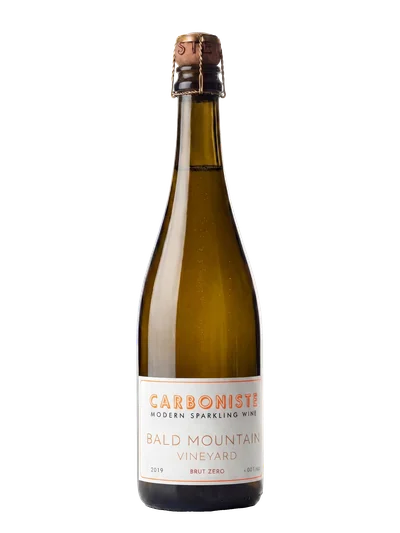
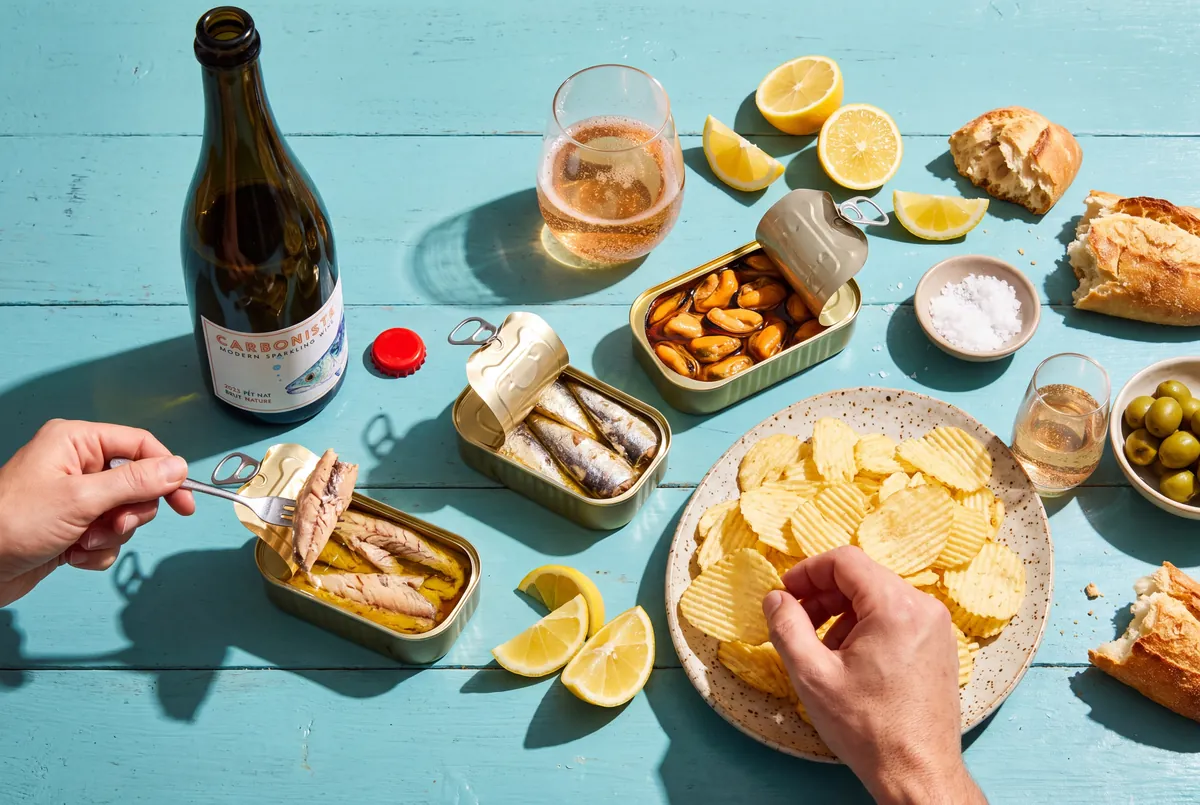
The short answer: pét-nat, short for pétillant naturel, is a sparkling wine made with a single fermentation. The juice starts fermenting in the cellar, and we bottle it before it finishes, so the last of the fermentation happens inside the bottle and the bubbles stay trapped in the wine. Traditional-method sparkling wine works differently. It gets two separate fermentations: one to make a dry base wine, and a second one in the bottle after fresh sugar and yeast are added.
Pét-nat is also called méthode ancestrale, the ancestral method. Dan has his own playful name for it: “You might call it méthode accidentale.” His tongue-in-cheek version of the history goes like this: winemakers trying to make still wine bottled it with a little sugar left in it, and the wine started fermenting again in the bottle. Happy accident.
Why pét-nat tastes like nothing else
Because the wine is bottled mid-fermentation, a winemaker has very little chance to fine-tune it. There’s no long stretch of blending, adjusting and polishing. “It’s a wine that’s made in harvest,” Dan says. “This is kind of a wine that’s made à la minute.”
That makes pét-nat more rustic than traditional-method sparkling wine, and it’s also the reason people love it. In Dan’s words, “there’s a rusticity, but there’s also a primalness, a freshness, and an energy that you wouldn’t get with any other method. You’re going to make wines that don’t taste like anything else.”
The big decision: when to bottle
With pét-nat, the bottling date is everything. Whatever sugar is still in the wine when it goes into the bottle becomes bubbles. Bottle too early and there’s too much sugar left. “That will lead to an excessive amount of CO2, which causes gushing,” Dan says.
So we measure instead of guessing. Sugar makes juice denser, so we track the density of the wine, in degrees Brix, as it ferments slowly in a cold tank. Alongside it, we let a small sample ferment all the way to dry in the office. That tells us what a fully dry reading looks like for this particular wine. When the tank sits about 1.6 Brix above that dry reading, roughly 16 grams of sugar per liter are left to ferment. That’s our moment to bottle.
Pét-nat, not pét-nasty
Pét-nat has a reputation. People expect it to be cloudy, funky, or prone to blowing its top. Dan would like to retire that idea. “We make pét-nat, not pét-nasty,” he says. “The method doesn’t define the level of funk. You can make a proper delicious pét-nat. It’s an expression of the rusticity and the varietal character, and not just of poor hygiene.”
That’s why we disgorge our pét-nat. Many producers leave all the spent yeast in the bottle. Dan finds that a full load of yeast sediment adds “a heaviness to the palate, a coating quality on your tongue” that the wine doesn’t need. “It doesn’t taste like grapes to me,” he says. “It tastes like sediment.” Removing it lets you taste the fruit more cleanly.
We still keep it gentle. The bottles are riddled on gyropalettes, the machines that slowly turn and tilt them so the yeast slides into the neck, but we skip the riddling aids we use on our other wines. Those aids contain bentonite, a clay that strips out some of the wine’s protein, and on our pét-nat Dan would rather leave that protein in. You may spot a whisper of yeast on the side of the bottle or a little sediment. That’s normal, and it’s part of the wine.
Meet the Mackerel
Our pét-nat is the Mackerel, made from 100% Pinot Grigio grown at Vista Verde Vineyard in Paicines, San Benito County. We’ve worked with a few different Pinot Grigio vineyards over the years. Vista Verde, owned by the well-known California winery Williams Selyem, is a Central Coast site with good limestone, and Dan’s reasoning was simple: it’s a place that should grow good Pinot Grigio.
Here’s how the 2023 was made:
- Skin contact: the grapes sat with their juice for two days before pressing. Dan adjusts this each year. When the 2026 fruit came in warm, it had plenty of color after just 24 hours.
- Fermentation: wild yeast, bottled unfinished so the fermentation completes in the bottle.
- Time on the yeast: 21 months before hand disgorging.
- Finish: zero dosage and a crown cap.
That short skin contact gives the wine a copper glow. Italians call this style ramato, which means copper. “There’s a kind of orangeness and sometimes a little redness, like the color of copper,” Dan says, and the color brings flavor density with it.
Why zero dosage? Most sparkling wines get a small dose of sugar after disgorging to soften sharp acidity or bitterness. Pinot Grigio is naturally a little lower in acid, and nearly two years in bottle rounds it out, so the Mackerel doesn’t need it. “We’re kind of keeping the wine in more of a naturalistic, nothing but the grapes philosophy,” Dan says.
Pinot Grigio may seem a surprising choice, since most people know it as a simple, inexpensive white. Dan calls it the Rodney Dangerfield of grapes because it gets no respect. In fact Pinot Grigio is a pink-skinned mutation of Pinot Noir, and with a little skin contact and time it shows real depth. In the 2023 Mackerel, look for apricot and peach, black tea, and a clear herbal streak.
Why a mackerel?
Every critter is a spirit animal for its wine. “Pinot Grigio has a little bit of fattiness, an oiliness,” Dan says. He doesn’t mean the wine is oily; it has a richness, weight and body that remind him of an oily fish, and “a really fresh mackerel is a delicious thing.” The colors fit too: the mackerel’s blue-green back suggests cool, soft acidity, and its pink belly matches the wine in your glass. The Mackerel was our third critter, after the Octopus and the Urchin rosé.
Does pét-nat age?
We don’t make a big deal of it, but yes, beautifully. Dan’s pét-nats already rest in bottle for close to two years before release, and Pinot Grigio rewards that time with weight, a gentle salinity from the yeast, and fruit that grows “very pretty and generous.”
The oldest Mackerel Dan has opened is the 2018, our first vintage, at about eight years old. It had what he calls “this really beautiful sort of rich apple quality,” fresh and generous rather than tired.
How to serve a Mackerel
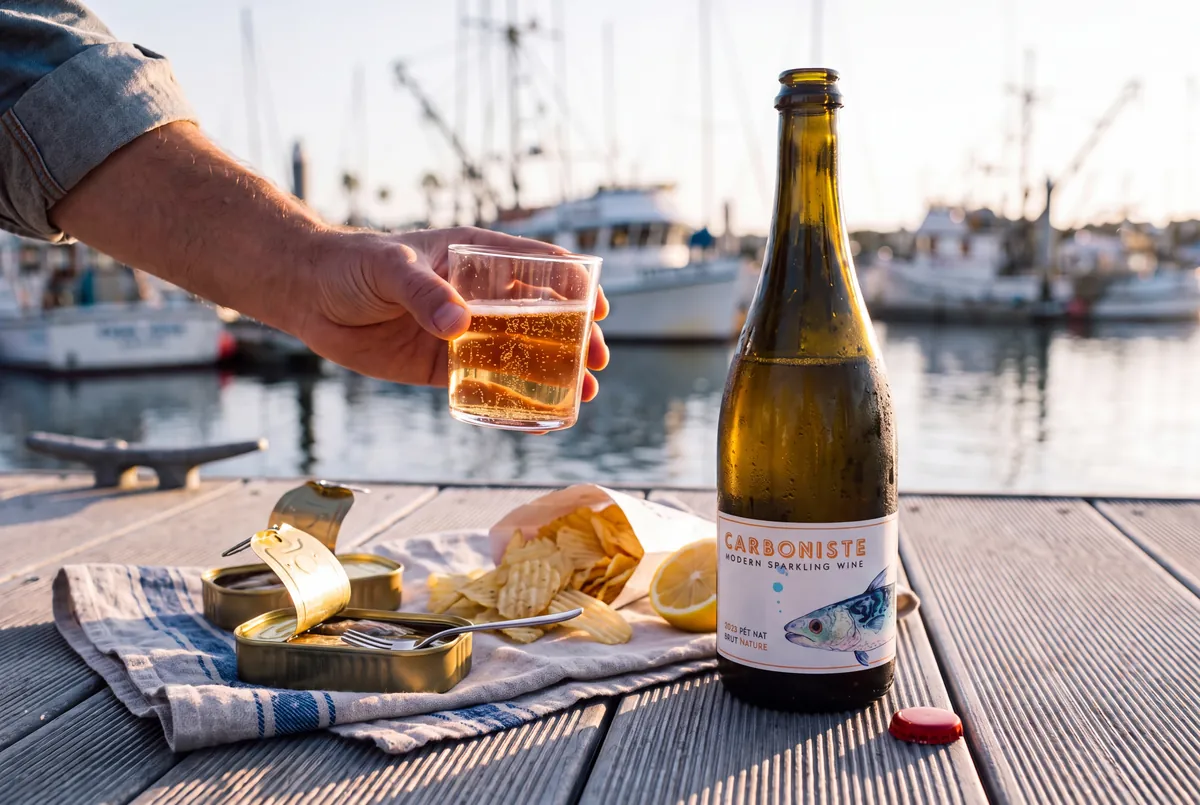
Straight from the fridge is fine, and a few degrees warmer is even better. “You chill it, you kill it,” Dan says. Good white wines show more as they warm up a little in the glass, and that happens on its own a few minutes after you pour. Because we control the sugar so carefully at bottling, the Mackerel isn’t prone to gushing, so you can open it like any other bottle of bubbles.
As for food: Dan’s favorite is a tin of good mackerel or sardines (fancy Spanish tinned fish if you have it) and a bag of plain, salty potato chips. The salt, crunch and richness of the fish play perfectly against the wine’s energy.
The one thing to remember: it’s pét-nat, not pét-nasty.
Quick answers
Is pét-nat the same as Champagne? No. Champagne is a place in France, and Champagne-style wines use two fermentations. Pét-nat uses one, finished in the bottle.
Is all pét-nat cloudy? No. Cloudiness comes from leaving the yeast in. We disgorge ours, so it pours bright.
Is pét-nat sweet? Not necessarily. The sugar left at bottling ferments into bubbles, and the Mackerel is finished with zero dosage.
Why do some pét-nats gush when you open them? Usually because they were bottled with too much sugar left in them. We measure the sugar before bottling to avoid exactly that.