
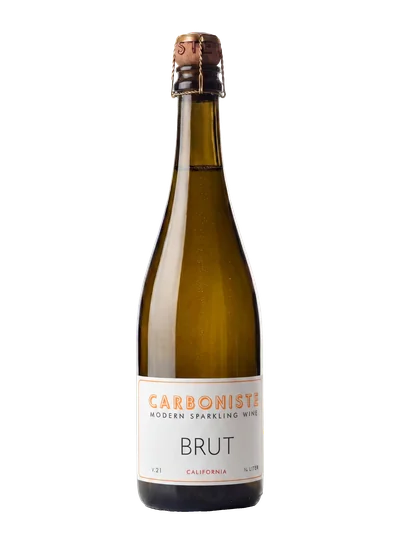
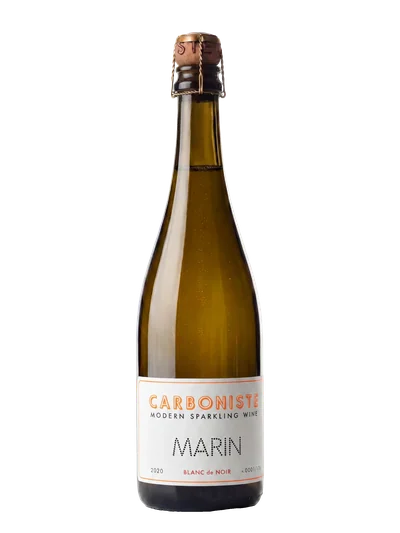
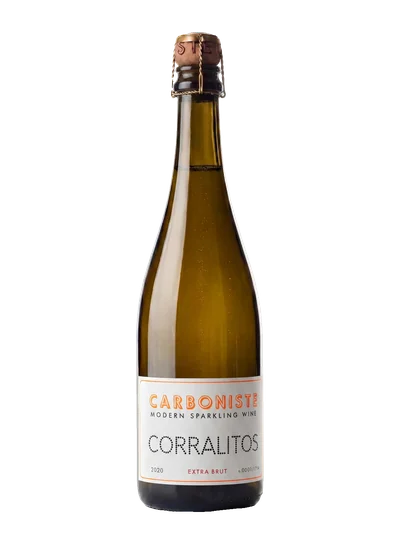
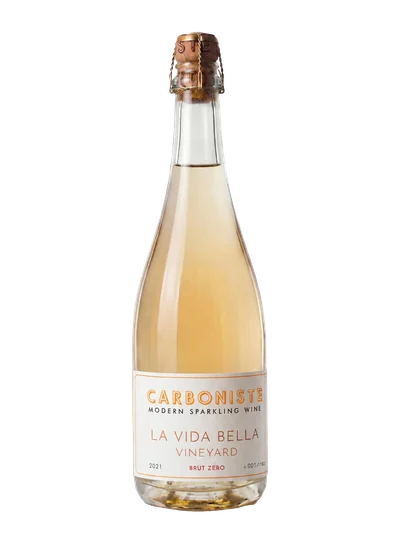
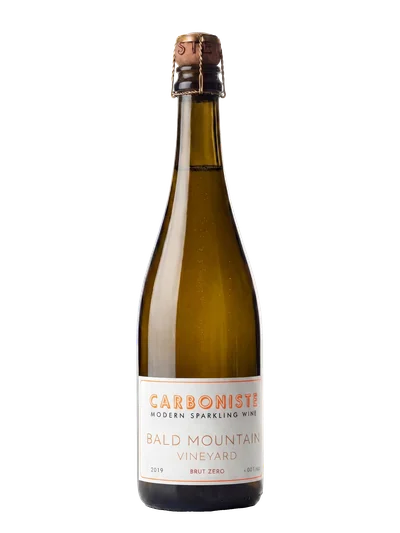
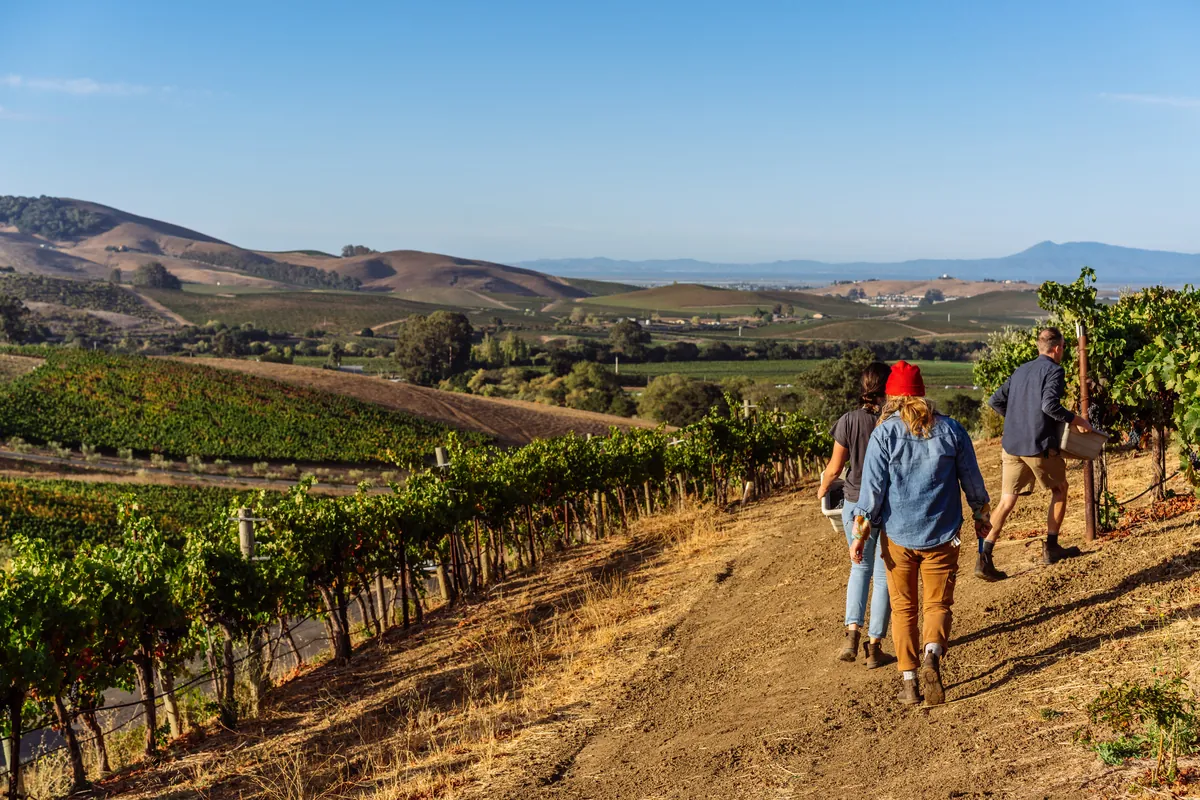
The short answer: most of our sparkling wines use the traditional method, the same basic process used in Champagne. We make a still base wine first. Then we add a little sugar and fresh yeast, seal it in a bottle, and let it ferment a second time. The carbon dioxide from that second fermentation can’t escape, so it dissolves into the wine as bubbles. Finally, we collect the spent yeast in the neck of the bottle and remove it by hand. Our pét-nat, the Mackerel, is the exception, with a single fermentation; here’s how that works.
Here’s the whole journey, in winemaker Dan Person’s words.
1. Picking early, for crunchy fruit
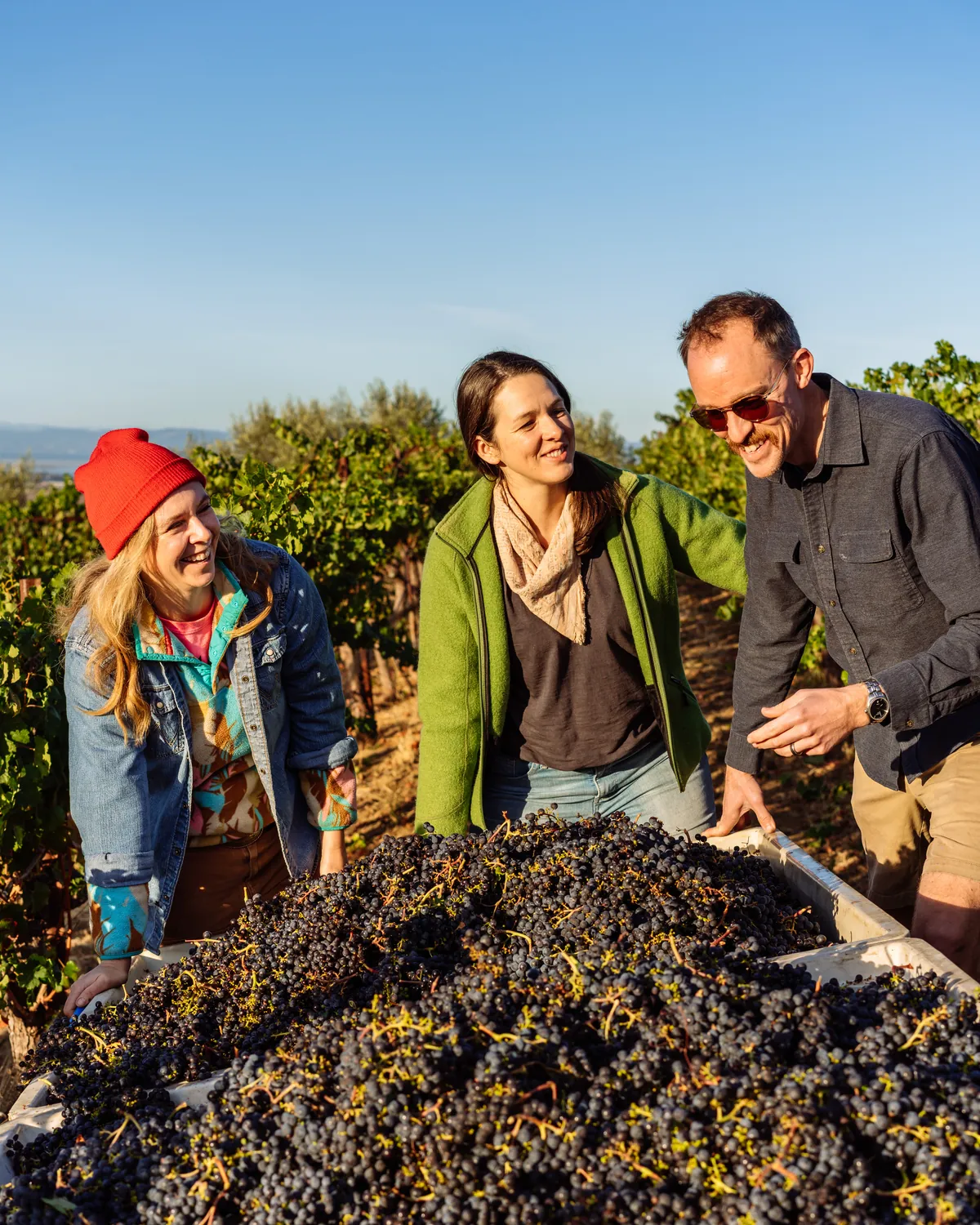
Picking grapes for sparkling wine works the same way as picking for still wine. The difference is timing. We pick two or three weeks earlier than someone making a still wine from the same grapes.
Dan calls the result “crunchy fruit.” Think of a fresh bag of grapes from the grocery store, the kind that crunch and pop in your mouth. Now think of the same bag two or three weeks later, found in the back of the fridge, soft and a little mushy. “The mushy grapes are kind of what people make really ripe wines from, high alcohol wines,” Dan says. “With sparkling wine, we make them from those crunchy grapes that pop in your mouth.”
2. Pressing
Back at the winery, nearly everything goes into the press as whole clusters, without crushing first. That limits the bitter compounds, called phenolics, that come from the skins and seeds. The exceptions are the wines where we want skin contact on purpose: the Mackerel, the Crab, and the reds, the Rouge Brute and the Beta.
The juice settles in tanks, chilled for a day or two, and then we rack it, drawing the clear juice off the heavy sediment.
3. The first fermentation
This is where our wines start to go their separate ways:
- The Octopus (our sparkling Albariño) ferments in stainless steel tanks to keep it as fresh and bright as possible.
- Our other sparkling wines ferment in barrels.
We generally rely on native yeast, the yeast that arrives with the grapes and lives in the winery, and we let malolactic conversion happen naturally. That’s the step that softens a wine’s sharper acids. The Albariño is the one wine where we try to prevent it, because its bright acidity is the point.
4. Time in barrel
Once fermentation finishes and the yeast settle, the wines rest. How long depends on the wine:
- The Octopus gets a very short rest. “We want to retain youthfulness and brightness,” Dan says.
- The barrel-fermented wines stay in barrel for at least nine months and up to three years. Our Whale, for example, saw up to 30 months in neutral barrels for its 2022 component.
That barrel time is where much of our character comes from. The wine rests on its yeast and breathes slowly through the wood, and the fruit grows deeper and more savory. “Young Chardonnay, when it’s a fresh young wine, is very boring,” Dan says. It’s only with slow, careful development in barrel that it turns into something delicious.
5. Blending and training the yeast
When the wines are ready, we taste through the lots and blend toward the style we want for each critter. The blend is chilled to settle out excess tartaric acid, the source of those harmless little crystals you sometimes see in wine, and then racked clean.
Next comes the yeast culture for the second fermentation. “The yeast culture is super important,” Dan says. Restarting fermentation in a finished wine is tough on yeast, because the wine already has alcohol in it. So we train them. Over four days, the culture starts out in a lower-alcohol mix and ferments itself into higher and higher alcohol. By the time it goes into the full base wine, the wine is actually easier than what the yeast just came through.
“We give them a little bit of training, a little bit of stress,” Dan says, “and then at the end we kind of take that stress away, and it’s very easy for them to finish the fermentation.”
Then we add sugar and the culture to the wine and bottle it. For this step we use a commercial yeast strain, because consistency in the bottle matters. Sugar is what we normally feed this second fermentation; we’ve occasionally used grape juice, but it isn’t our usual practice.
6. The second fermentation and time on the yeast
Sealed in the bottle, the yeast eats the sugar and makes carbon dioxide, and that’s the moment the wine becomes sparkling. Then it rests on the spent yeast for anywhere from three months to three years, depending on the wine. The Octopus spends about three months, just long enough for the yeast to finish all the sugar so it can be safely riddled and disgorged. Our Reserve wines stay much longer.
7. Riddling and hand disgorging
To get the yeast out, the bottles go on gyropalettes, machines that slowly turn and tilt them until the sediment collects in the neck. That takes about five days, a little shorter or longer depending on the wine. Then every bottle is disgorged by hand: opened so the pressure pushes the yeast out, and sealed with a crown cap. It’s slow, deliberate, small-winery work.
Where we’re different from Champagne
Champagne gets its yeasty character mostly from time in the bottle. Many of our wines get it twice: once in barrel and again in bottle. Dan thinks the difference shows in the glass.
“The yeast in bottle are very confectionery, they’re very sweet, they kinda taste like sugar because those are yeast that were fed sugar,” he says. “The yeast in barrel, they were fed the juice, and so when they break down, they don’t taste confectionery.” Instead they bring a savory quality and a real salinity, which balance all that California fruit.
He compares it to cooking. You don’t pile sweet on sweet: “You don’t add caramel on top of something else that’s sweet.” You add something savory. Barrel time is how we add the savory to the sunshine.
That’s also what “Reserve” means at Carboniste. “Reserve really means wine that is held back,” Dan says. Reserve wines spend longer in the cellar, longer in barrel and longer in bottle, so they get the most out of both kinds of yeast. The confectionery side adds nuance without taking over.
Wines that taste like grapes
Every step above serves one idea. “I want wines that taste like grapes, not wines that taste like oak or like yeast,” Dan says. The juiciness, the pop of the grape, should be what you taste first.
That’s also why he doesn’t plan a wine’s flavor in advance. “I discover the wines, not define them before they’re made,” he says. “I don’t go into crushing grapes and think, okay, I know exactly what this wine’s going to taste like. It’s more like, I’m excited to find out what this wine tastes like.”
Taste the difference
Open an Octopus next to a Whale. The Octopus is the stainless steel, short-aged, pure-sunshine side of our cellar. The Whale is the barrel-aged side, with its creamy texture and savory depth. Or open whichever one is in your fridge. As Dan puts it, “every night is a good night for sparkling wine.”
The one thing to remember: we make wines that taste like grapes.
Meet the Octopus · Meet the Whale
Quick answers
How do bubbles get into sparkling wine? A second fermentation in a sealed bottle traps the carbon dioxide in the wine.
Why are grapes for sparkling wine picked early? Earlier grapes are crisp and fresh, with more acidity and less sugar, which means a lighter, livelier wine.
How long does it take to make sparkling wine? For us, it ranges from a few months in bottle for the Octopus to several years in barrel and bottle for our Reserve wines.
What is disgorging? Removing the spent yeast from the neck of the bottle after the second fermentation. We do it by hand.