
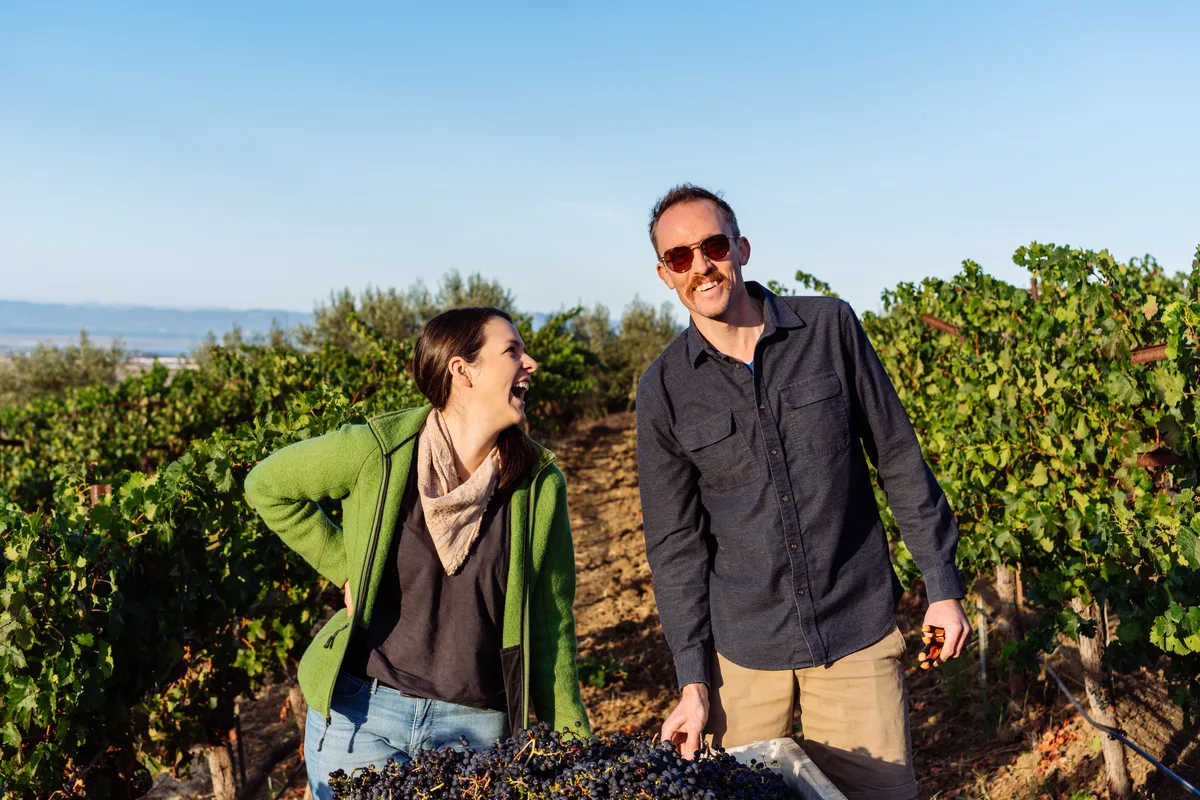
The short answer: harvest for sparkling wine comes early and fast. We pick before the still-wine winemakers do, and because so many sparkling grapes ripen at the same time, the whole crush is packed into a few intense weeks. In 2026 it started on July 23rd and we were done crushing by August 14th. After that comes the quieter part most people never see: months of looking after the wines while they ferment and rest.
A short, intense season
Before Carboniste, I made Napa Cabernet and other still wines, and a still-wine harvest goes on and on. A sparkling harvest is a nice relief by comparison. We pick early, for fresh, crunchy fruit, and a lot of our grapes ripen around the same time. Usually it’s pretty intense from mid-August, and by mid-September we’re done.
2026 was a very early year. It wasn’t because the summer was hot. It was really warm over the winter, so the vines started growing earlier than usual, and everything moved up. We started picking on July 23rd and finished crushing by August 14th.
Once you’re through that avalanche of fruit, harvest can actually turn into a pretty laid-back time. The crushing is done, and what’s left is getting everything fermented.
The smell of harvest
My favorite part is the smell. Harvest has a smell like no other time of year: grapes, dust from the vineyard, fermentations going in the winery. It’s an entire scent universe that’s completely different from the rest of the year.
The one that hits hardest is the very first. You can smell when harvest starts. There’s dirt in the air, something to do with the tractors and the grapes being picked, and it smells like vineyard dirt. When I smell that, I know we’re on.
After the crush: babysitting
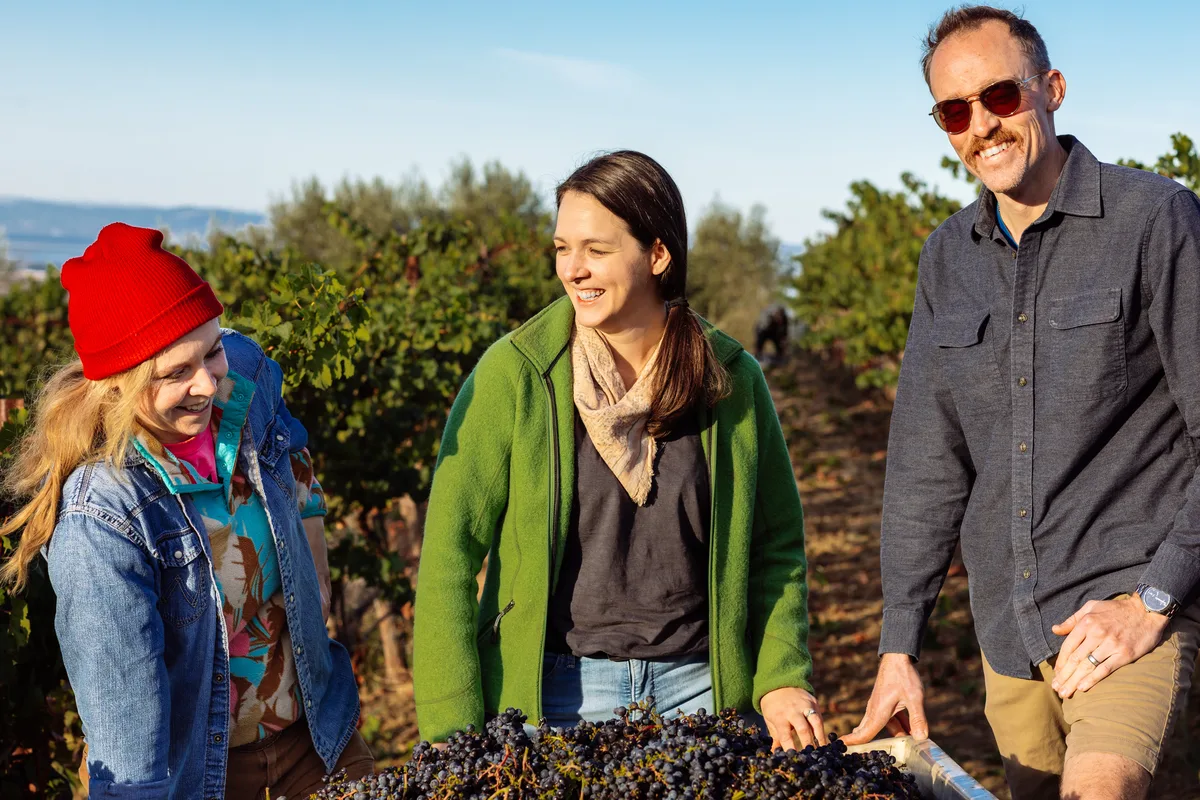
What most people don’t see is everything after the grapes come in. For me that’s babysitting the fermentations: making sure the yeast finish, monitoring the barrels, topping them up, stirring some of them depending on the lot, and sampling to make sure everything is fermenting properly or has finished. It’s stewardship. Our wines spend anywhere from three months to three years with us before they’re bottled, and every lot is a little different.
The Albariño for the Octopus lives in stainless steel tanks, so it’s pretty simple: keep it clean, keep it happy, get it fermented, and protect it until bottling.
The lots in barrel are even more hands-off. That’s the nice thing about fermenting in barrel with native yeast: the wines ferment themselves. If you give grape juice the opportunity, it’ll just turn into wine. My job is to oversee that process and let it happen on its own. It’s what I call low-resistance winemaking.
Why harvest still matters
Harvest is like no other time of year. There’s a special smell in the air and a special chemistry happening, with yeast eating sugar as fast as they can. A whole other world switches on for a couple of months.
I think it’s something we used to be much more in touch with as people. Most of us don’t work on farms anymore, but there are still industries that run on the heartbeat of harvest season, and wine is one of them. It’s part of what makes vintage wine special. Every year is different, because the seasons change, and the wine follows them.
The one thing to remember: harvest is like no other time of year, and every vintage carries its own season in the bottle.
Meet the Octopus · Meet the Whale
Quick answers
When is harvest for sparkling wine in California? Earlier than for still wine. Ours usually runs from mid-August to mid-September; in the early 2026 vintage it ran from July 23rd to August 14th.
Why are grapes for sparkling wine picked early? For fresh, crisp fruit with bright acidity and less sugar, which makes a lighter, livelier wine.
What happens after the grapes are crushed? Fermentation and aging. We look after each lot, in tank or barrel, for three months to three years before bottling.
Why was the 2026 harvest so early? A warm winter got the vines growing earlier than usual, so the grapes were ready early.