
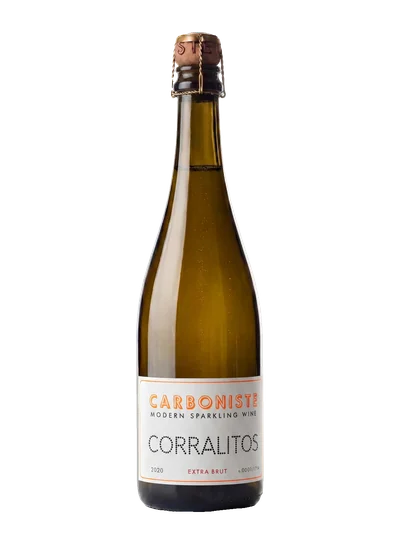
The short answer: Corralitos is a small town in the Santa Cruz Mountains, and its sandy soils make some of the most delicate, fresh Pinot Noir and Chardonnay in California. Our Corralitos Reserve is a traditional-method sparkling wine from three neighboring vineyards there, made to taste like the place: light, bright and perfumed.
A place, not a brand
Corralitos is a location, the same way Champagne is a place in France. It’s the name of a town in the Santa Cruz Mountains, and the wine is about the terroir: the soil, the weather, the place.
The Santa Cruz Mountains are underdeveloped in a lot of ways, and I mean that as a compliment. There’s a decent amount of viticulture, but it isn’t as professionalized as Napa and Sonoma, and it hasn’t been as exploited. There’s a wild-west rusticity and complexity to the sites that I love. Napa and Sonoma can be a little homogenized.
It’s rugged, mountainous country, so it’s hard to run a large commercial vineyard there. That’s probably why there’s been less development. A lot of the grape growing grew out of people’s personal passion. Somebody loved the idea of making wine from this area, so that’s what they did.
Walking on a beach
The soils are what make Corralitos for me. They’re very sandy, a light-textured soil. The accurate geological description is decomposed marine sediment, an old seabed. The poetic description is beach sand. They’re really one and the same.
When you walk through the vineyard, your feet slip underneath you, like you’re walking on a beach. That’s strange in a vineyard. Usually the soils have more clay and they’re firmer. But it’s not a bad thing. It’s a great thing. The lightness of the soil, how decomposed it is, is exactly what sets the wine apart.
That light soil drains well, and it gives Pinot Noir and Chardonnay no heaviness at all. You get very light, delicate, evanescent wines that float off your palate. That’s what I want for sparkling wine: lightness and brightness, with no heaviness anywhere. Even though we press the Pinot Noir gently and directly, the Corralitos always comes out with a faint blush. I call it precociously pink.
Three vineyards, one town
Our Corralitos comes from three neighboring vineyards: Deer Park Ranch, La Vida Bella and Francis J Vineyard. Winds come in off Monterey Bay, and the grapes are Pinot Noir and Chardonnay, the traditional Champagne grapes.
I think the Pinot and Chardonnay from Corralitos are more compelling than what a lot of other places offer for sparkling wine. So the goal here is to explore that terroir and express those beautiful grape flavors. I’m not trying to bury them under a big yeasty character or neutralize them. I want you to taste the grapes and the place.
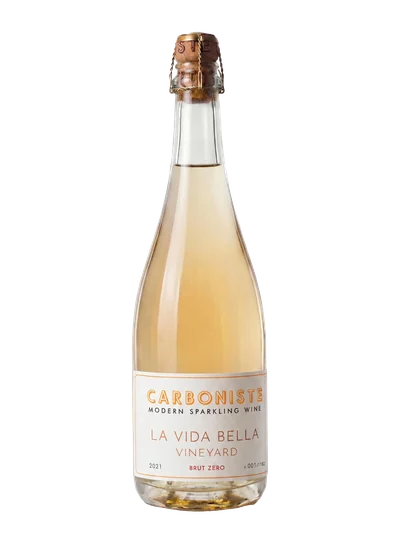
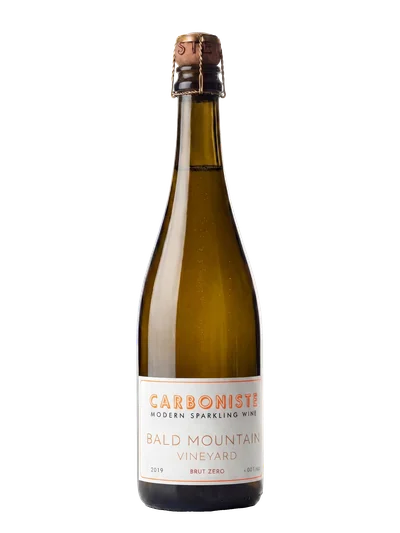
One of those vineyards had barrels so good in 2021 that they became their own wine: our La Vida Bella Brut Zero.
How we make it
All of our Reserve wines are made the same basic way, and the point is to let each site express itself. It’s not about dictating what the wine should taste like. It’s about discovering what the wine can taste like, and noticing the qualities of a site that you’d miss if you treated it like a cog in a machine.
- Pressing: whole clusters, pressed gently, and the juice racked off super clean. I don’t like heavy sediment in my Pinot and Chardonnay fermentations.
- Fermentation: in barrel, with native yeast, and native malolactic conversion. More on native fermentation here.
- No sulfur, for as long as possible: the 2020 spent 12 months in barrel on its sediment without added sulfur. You can’t just hope and pray with that. You have to pay attention to every barrel. In this vineyard, the natural acidity does a lot of the protecting for us.
- Time in bottle: after the second fermentation, the 2020 aged 22 months on its yeast before we disgorged it, then got a light 3 grams per liter of dosage and a cork and cage.
From harvest to release, a Corralitos takes five or six years. A critter is usually ready in six to 18 months. Here’s why the Reserve wines take so long.
In the glass
Corralitos is defined by those sandy soils. It’s delicate, with fresh fruit, mainly pear and orange blossom. It’s a perfumed wine.
When to open it
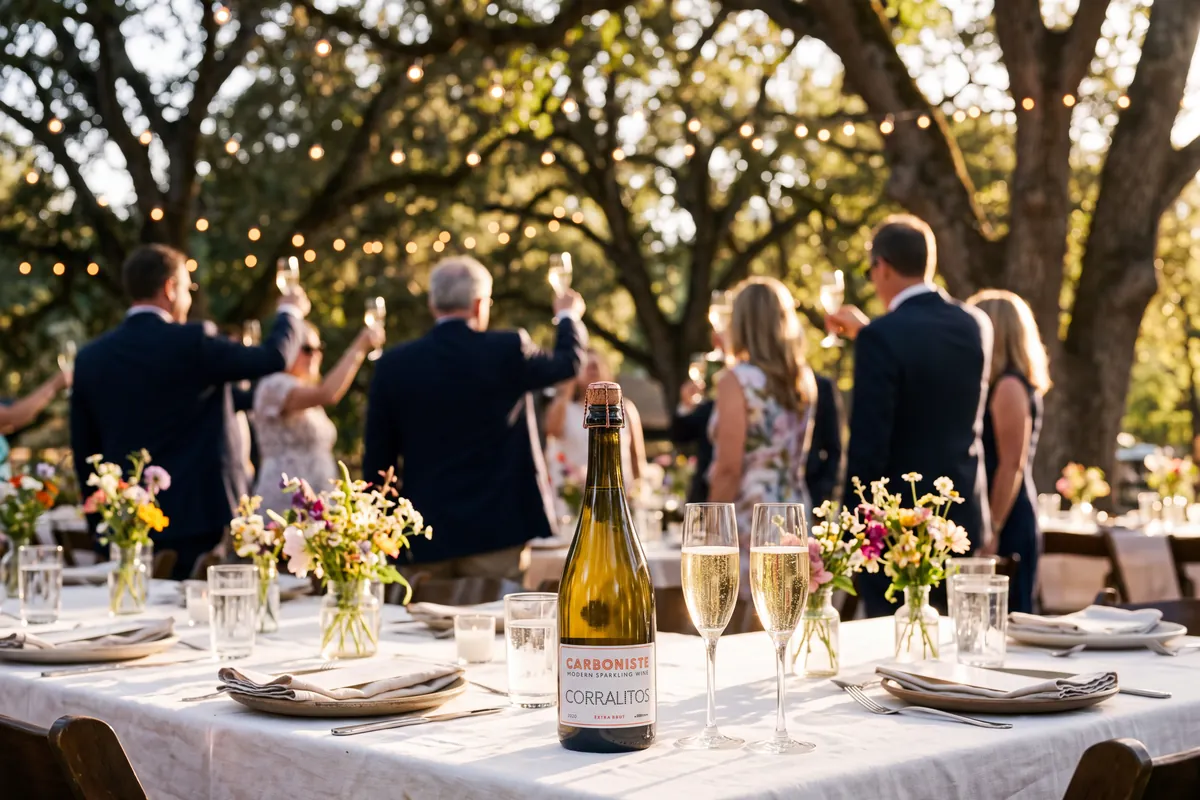
It’s a wine for contemplation, for meditation. Something to sit down with and have a quiet moment. It’s also a wine for good friends: sharing a bottle, having good conversation, a nice dinner. It’s great with hors d’oeuvres as a cocktail-hour wine, and it’s a natural for a toast, which is why I wanted a wedding in this picture.
If you want to have fun with the food, I like it with a banh mi or a basket of truffle fries.
The one thing to remember: it’s a wine for a nice moment. Take your time with it.
Quick answers
Where is Corralitos? A small town in the Santa Cruz Mountains of California, a few miles inland from Monterey Bay.
What grapes grow in Corralitos? Our Corralitos vineyards grow Pinot Noir and Chardonnay, the traditional Champagne grapes.
What makes Corralitos soil special? It’s sandy, decomposed marine sediment that feels like beach sand underfoot. It drains well and gives very light, delicate wines.
What does Extra Brut mean? A very dry sparkling wine with a small amount of dosage. The label terms, explained.